Crypto Liquidity Pools Explained
With the crypto market evolving rapidly, liquidity pools have become a fundamental aspect of decentralized finance (DeFi). In 2024 alone, the DeFi sector has accounted for over $4.1 billion lost due to various hacks and vulnerabilities. Understanding crypto liquidity pools is essential for anyone looking to navigate this environment securely. In this article, we’ll break down what liquidity pools are, their significance, and how to effectively utilize them.
What Are Crypto Liquidity Pools?
Crypto liquidity pools are collections of tokens that enable users to trade cryptocurrencies on decentralized exchanges (DEXs) without needing a traditional order book. Instead, liquidity is provided by users known as liquidity providers who deposit their assets into these pools.
- Liquidity Providers: Users who supply their cryptocurrencies to the pool, earning fees in return.
- Automated Market Makers (AMMs): Algorithms that facilitate trading and set prices based on the amount of tokens in the pool.
- Decentralized Exchanges: Platforms like Uniswap and SushiSwap that rely on liquidity pools to operate without intermediaries.
How Do Liquidity Pools Work?
The inner workings of liquidity pools can be analogous to a bank vault for digital assets. When you deposit your cryptocurrencies into a liquidity pool, you effectively enable others to trade against your funds while earning a share of the transaction fees. Here’s how it typically works:
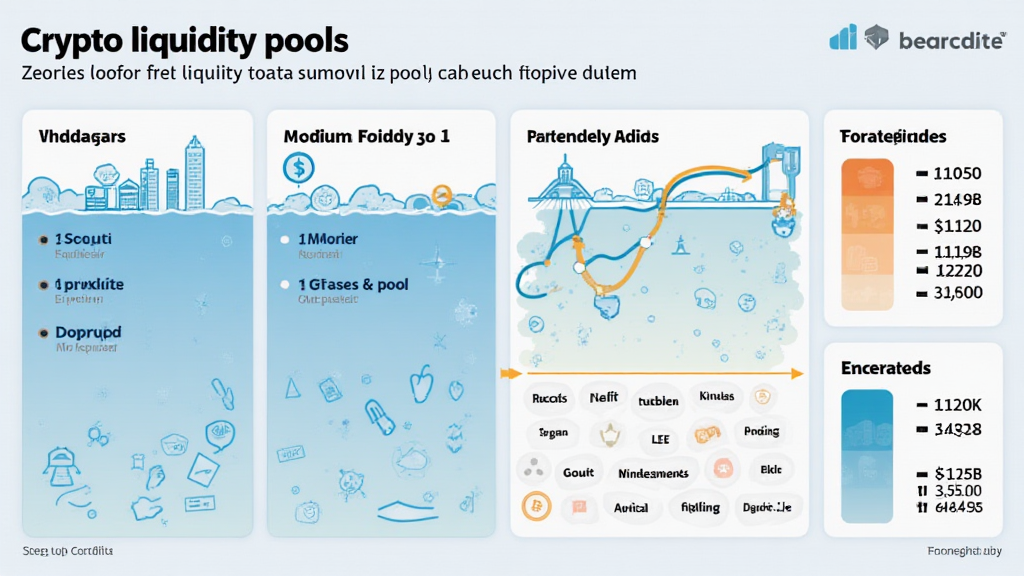
- Users deposit an equal value of two cryptocurrencies into the pool (e.g., ETH and USDT).
- The AMM uses an algorithm to determine the price based on the pool’s ratios.
- Traders can swap tokens directly in the pool, and liquidity providers earn a percentage of the fees from each transaction.
The Benefits of Participating in Liquidity Pools
Participating in liquidity pools has several advantages that can be capitalized on if approached correctly:
- Passive Income: By providing liquidity, you can earn fees without needing to actively trade.
- Diversification: Liquidity pools allow users to hold multiple assets within one ecosystem.
- Reduced Slippage: The more liquidity there is, the less price impact there is on trades.
Risks Involved with Liquidity Pools
While liquidity pools offer significant benefits, they also carry certain risks:
- Impermanent Loss: This occurs when the value of tokens in the pool diverges significantly compared to holding them outside the pool.
- Smart Contract Vulnerabilities: Being exposed to potential hacks or bugs within the smart contracts.
- Market Volatility: Sudden price swings can affect the profitability of liquidity providers.
How to Participate in Liquidity Pools
Here’s a step-by-step guide to participating effectively in liquidity pools:
- Choose a decentralized exchange (like Uniswap) that you want to use.
- Connect your cryptocurrency wallet (MetaMask, for instance).
- Select the tokens you wish to provide and deposit them into the liquidity pool.
- Monitor your investment regularly and be mindful of any changes in pool performance.
Case Study: Success Stories from Vietnamese Liquidity Providers
In Vietnam, the crypto industry has been experiencing significant growth, with a user growth rate of over 40% year-on-year. Many Vietnamese investors have successfully utilized liquidity pools on platforms like PancakeSwap, driving impressive returns:
| Investment | Return Rate | Duration |
|---|---|---|
| $500 | 25% | 3 months |
| $1000 | 40% | 6 months |
Best Practices for Liquidity Providers
To mitigate risks while maximizing potential rewards, consider these best practices:
- Research: Always analyze the project behind the token and the general performance of the liquidity pool.
- Start Small: Begin with a modest investment to understand the mechanics of the pool.
- Diversify: Don’t put all your assets into one pool—spread out to reduce risk.
Conclusion
Crypto liquidity pools can serve as a valuable tool for both passive income and efficient trading strategies. However, understanding their mechanics and associated risks is crucial before diving in. Whether you’re a seasoned trader or a newcomer in the crypto space, familiarizing yourself with liquidity pools can open up new opportunities for securing your financial future. In Vietnam, embracing these innovations could indeed align with the growing demand for efficient trading solutions in the burgeoning crypto market.
To explore more about liquidity pools or receive expert insights, check out coinca111 today!