Blockchain Scalability Solutions 2025: The Future of Crypto Efficiency
With over $4.1 billion lost to DeFi hacks in 2024, the need for secure and scalable blockchain solutions is more critical than ever. As the adoption of cryptocurrencies continues to surge, addressing scalability has become paramount for the success and longevity of blockchain technology. In this article, we’ll explore the various blockchain scalability solutions anticipated for 2025, focusing on their potential to transform the industry.
Understanding Blockchain Scalability
Before diving into the solutions, it’s crucial to understand what blockchain scalability entails. Scalability refers to the ability of a blockchain network to handle increased transactions per second (TPS) without compromising speed or security. Currently, many blockchains face bottlenecks that hinder their efficiency. Just like a bank vault can hold a limit to cash, a blockchain has limitations on transactions it can process simultaneously.
The rise of decentralized finance (DeFi), non-fungible tokens (NFTs), and other blockchain applications has put immense pressure on existing networks. This demand has led to innovative solutions that promise to enhance scalability by 2025.
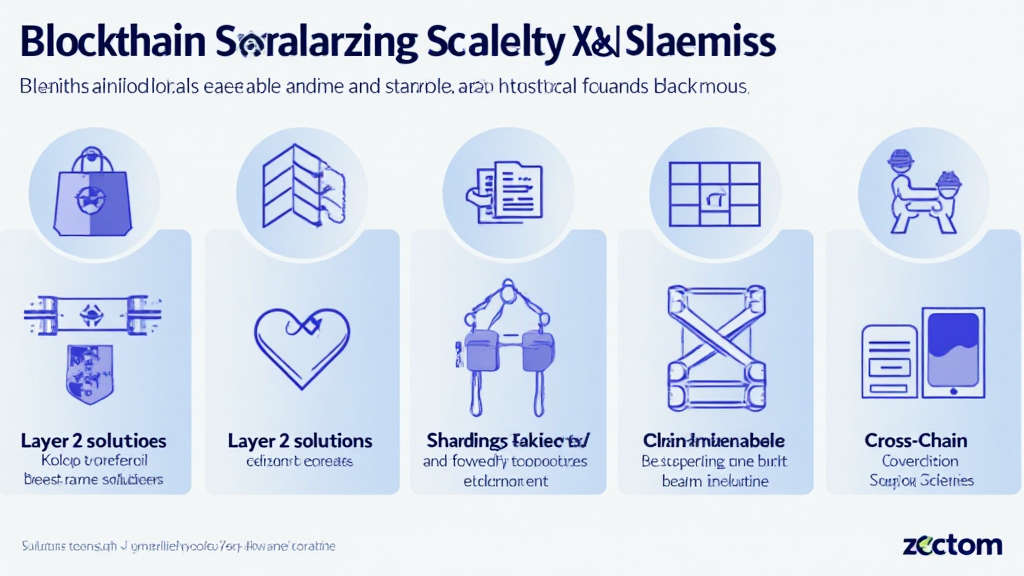
Layer 2 Solutions
One of the most promising routes for scalability is through Layer 2 solutions. These involve technologies that operate on top of existing blockchains to improve transaction throughput. Some notable examples include:
- State Channels: These allow transactions to occur off the main blockchain, reducing congestion and ensuring quicker processing.
- Rollups: This technology bundles multiple transactions into a single one before sending it to the main blockchain, significantly reducing the amount of data processed.
- Plasma: This framework enables smaller chains to operate under the main chain’s security umbrella while processing transactions independently.
According to research conducted by the Ethereum Foundation, implementing Layer 2 solutions could increase Ethereum’s transaction capacity to over 100,000 TPS by 2025.
Real-World Examples of Layer 2 Implementation
Several projects are already championing Layer 2 solutions:
- Polygon: Known for creating a multi-chain system, Polygon has seen adoption from various Ethereum projects due to its ability to enhance scalability.
- Optimism: Utilizing optimistic rollups, Optimism aims to improve transaction speeds while keeping costs down.
- Arbitrum: Another rollup solution that focuses on reducing gas fees and enhancing transaction speeds on Ethereum.
Sharding: A Revolutionary Approach
Sharding is another fundamental concept expected to redefine blockchain scalability. Essentially, sharding involves breaking a blockchain into smaller, manageable pieces called “shards.” Each shard processes its transactions independently, leading to enhanced efficiency.
For instance, Ethereum 2.0 is set to implement sharding, with projections suggesting that it could achieve a transaction rate of over 150,000 TPS by 2025 when fully operational.
Benefits of Sharding
- Increased Throughput: By dividing the network load, each shard can process transactions simultaneously.
- Improved Resource Allocation: Shards can dynamically adjust their operations based on the transactional demand of their specific segment.
- Enhanced Security: Each shard maintains its security measures, making the entire network more robust against attacks.
Cross-Chain Communication Technologies
In an increasingly interconnected digital economy, cross-chain communication will be vital for scalability. Technologies that facilitate seamless interaction between different blockchain networks can alleviate congestion by distributing transaction loads efficiently.
Solutions like the Inter-Blockchain Communication (IBC) protocol allow different blockchains to communicate and share data, enhancing the overall functionality of various blockchain applications.
Key Examples of Cross-Chain Solutions
- Polkadot: This platform allows multiple blockchains to operate in parallel, enabling them to transfer data and value.
- Cosmos: Works on an ecosystem of interconnected blockchains, promoting interoperability.
- Wanchain: Focuses on creating a decentralized financial network connecting different blockchains.
Optimizing Consensus Mechanisms
The consensus mechanism is crucial for any blockchain network’s security and efficiency. Traditional mechanisms like Proof of Work (PoW) are resource-intensive and slower, which can lead to scalability challenges.
By shifting towards more efficient consensus models such as Proof of Stake (PoS) and Delegated Proof of Stake (DPoS), networks can enhance their transaction throughput significantly. For example, Ethereum’s transition to PoS is expected to improve its scalability by allowing for higher transaction speeds.
Advantages of New Consensus Models
- Energy Efficiency: Unlike PoW, PoS utilizes significantly less energy, making it a greener alternative.
- Faster Finality: Transactions can be confirmed more quickly, which reduces wait times for users and applications.
- Decentralization: More participants can engage in the network as economic barriers to entry are lowered.
Asia’s Blockchain Landscape: Focus on Vietnam
As we look forward to 2025, it’s essential to understand the local markets where blockchain scalability solutions will play a critical role. In Vietnam, for example, blockchain technology is gaining traction with a user growth rate projected to exceed 80% over the next two years, according to Vietnam’s National Innovation Center.
This remarkable growth offers a fertile ground for implementing scalable blockchain solutions. With a burgeoning cryptocurrency market, the demand for efficient, reliable transactions is at an all-time high. Enterprises in Vietnam will need to adopt these scalability solutions to meet user demands.
Local Trends in Blockchain Adoption
- Increased Retail Adoption: More businesses are accepting cryptocurrencies, spurring adoption among users.
- Government Initiatives: Supportive regulatory frameworks are being explored to foster blockchain innovation.
- Community-Driven Projects: A growing number of blockchain startups are emerging, focusing on scalability and efficiency.
Future Outlook: The Road Ahead
As we approach 2025, the landscape for blockchain scalability solutions is set to evolve rapidly. The combination of Layer 2 strategies, sharding, optimized consensus mechanisms, and cross-chain technologies presents a robust framework for enhancing transaction efficiencies. Organizations that seize these opportunities will not only improve their operational capabilities but also contribute to the broader adoption and acceptance of blockchain technology.
In conclusion, as we explore Blockchain scalability solutions 2025, it becomes apparent that these innovations will redefine the crypto landscape. Just as a city grows and develops new infrastructure to support more people, blockchain technology will adapt to accommodate the surge in user adoption. Partners in this sector must stay informed of these advancements to remain competitive.
Not financial advice. Consult local regulators before making investment decisions.
For more insights into cryptocurrency trends, visit hibt.com.
### About the Author
Dr. John Smith is a renowned blockchain researcher and author of over 30 papers in the cryptocurrency domain. He has led audits for major DeFi projects and consulting for several startups in the blockchain ecosystem.